HOOLIGANG
Joey Valence & Brae

What Are UGC Creators? The Complete Guide for Apps and DTC Brands in 2026
December 5, 2025
3 min
read
A complete 2026 guide to UGC creators for apps and DTC brands—what they are, how they differ from influencers, proven formats that convert, and real app examples winning with creator-led growth.
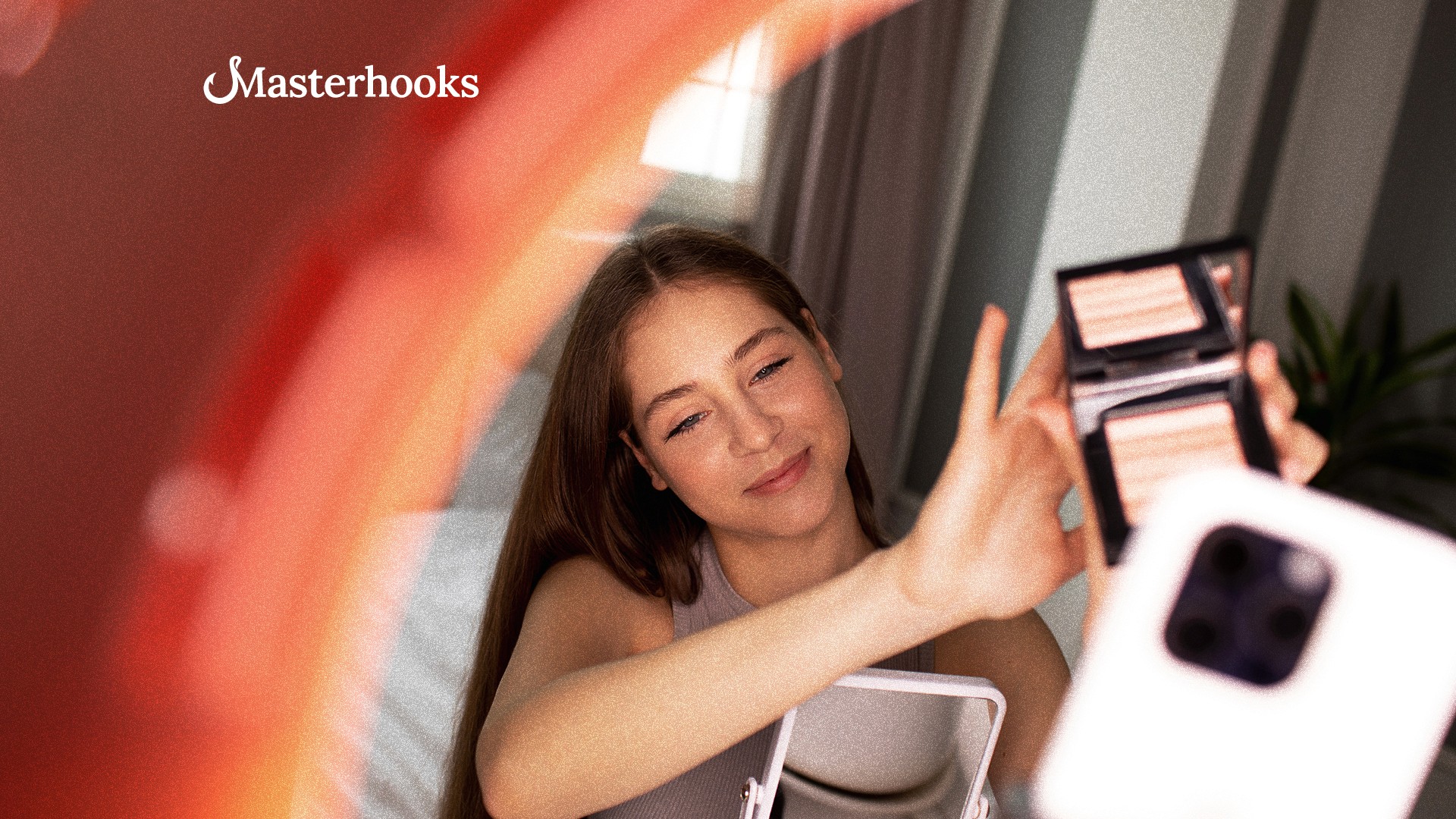
UGC creators are freelance content producers who film authentic, brand-owned videos—product demos, testimonials, reaction clips, and short-form ads—that you repurpose across paid media, organic social, and product pages. Unlike influencers, they're hired for production quality and hook-writing ability, not follower count. In 2025, platform-agnostic UGC campaigns surged 133% year-over-year, while TikTok-only campaigns dropped 48%, according to Collabstr's 2026 Influencer Marketing Report. The takeaway is clear: the brands winning right now aren't betting on a single platform. They're investing in versatile creator content that converts everywhere.
At MasterHooks, we've seen this firsthand. The apps and DTC brands scaling fastest are the ones treating UGC not as a nice-to-have but as the engine of their entire creative pipeline. This guide breaks down what UGC creators are, why they matter for app growth, which apps are already crushing it with UGC, and how to hire creators who actually move your metrics.
What Are UGC Creators?
A UGC creator is a freelancer who produces authentic, scroll-native content on behalf of a brand. Think short-form videos, product walkthroughs, testimonials, unboxings, and lifestyle clips designed to feel like organic social posts rather than polished advertisements.
The key distinction: you own the content. Unlike influencer posts that live on someone else's feed, UGC deliverables belong to you. You can deploy them across TikTok ads, Instagram Reels, YouTube Shorts, Meta campaigns, landing pages, email sequences, app store screenshots, and anywhere else your audience scrolls.
UGC creators sit in the gap between your actual customers (whose organic posts you can't control) and traditional influencers (whose value is tied to audience size). A strong UGC creator delivers camera presence, clean audio, punchy editing, and—most critically—hooks that stop thumbs in under three seconds.
UGC Creators vs. Influencers: What's the Difference?
The confusion between UGC creators and influencers costs brands real money, so it's worth being precise.
Influencers are paid for distribution. Their value comes from an established audience. You're renting their reach, and the content typically lives on their channels with usage restrictions.
UGC creators are paid for production. Their value comes from content quality—scripting, on-camera performance, editing, and the ability to make a product feel relatable. Follower count is irrelevant. A creator with 200 followers can produce a TikTok ad that outperforms a celebrity endorsement if the hook lands and the proof is clear.
Research backs this up. UGC is 8.7x more impactful than influencer content and 6.6x more influential than branded content when it comes to purchase decisions. Nearly 47% of shoppers rank user reviews and user-style content as the most influential factor when researching products—compared to just 11% for brand-generated social content.
The smartest teams use both. UGC fills the creative pipeline with testable assets at volume. Influencer partnerships extend reach when you've already identified winning formats. At MasterHooks, we typically recommend starting with UGC to find what converts, then amplifying winners through influencer distribution.
Types of UGC Content That Convert
Not all UGC is created equal. The formats that consistently drive results for apps and DTC brands include:
Talking-head testimonials — A creator speaking directly to camera about the product experience. These work because they mimic how people actually recommend things to friends. The key is specificity: real outcomes, named objections overcome, concrete results.
Product demos and walkthroughs — Hands-only or screen-recorded clips showing the product in action. For apps, this means showing the interface, demonstrating a workflow, or walking through a feature that solves a clear problem.
Unboxing and first impressions — The moment of discovery. These build anticipation and showcase the initial experience, which matters enormously for physical products and subscription boxes.
Before/after and transformation content — Particularly powerful for fitness apps, beauty brands, language learning tools, and productivity software. The visual contrast between "before" and "after" is inherently scroll-stopping.
POV try-ons and "day in my life" integrations — The creator naturally incorporates the product into their routine. This format works well for apps like Calm, Headspace, and MyFitnessPal where the value is habitual use, not a single moment.
Problem-agitate-solution hooks — The creator names a relatable pain point, amplifies the frustration, then reveals the product as the solution. This is the format that dominates performance marketing and the one MasterHooks' hook library is built around.
The golden rule: produce content in modular scenes. A single shoot should yield multiple hooks, alternate aspect ratios, and remix possibilities so you can test and iterate without reshooting.
15 Apps Winning Big with UGC (And What You Can Steal)
1. Duolingo — The UGC Masterclass
Duolingo is the gold standard for app UGC. Their TikTok presence, built around the chaotic personality of Duo the Owl mascot, has amassed over 8 million followers and billions of organic views. But what makes them relevant here isn't the brand account—it's how they've weaponized user-generated content.
The #DoYourThingChallenge encouraged users to post videos of themselves incorporating language learning into entertaining scenarios, generating massive organic reach. Their viral "Death of Duo" campaign saw mentions spike by 25,000% and the hashtag #ripduo used over 45,000 times. Duolingo actively reshares user memes, success stories, and challenge responses, turning their community into a content engine.
What to steal: Duolingo's user acquisition doubled during coordinated multi-platform UGC campaigns. The key was platform-specific content—comedy on TikTok, educational deep-dives on YouTube, visual memes on Instagram—all feeding the same narrative. If you're marketing an app, don't repurpose the same clip everywhere. Tailor hooks to each platform's native format.
2. Hopper — Scaling UGC to Kill Ad Fatigue
Travel app Hopper used UGC creators to produce TikTok and Meta ad content framed as "secret travel hacks." The hook format was intentional: every creator opened with a variation of "I found a hack that saves you hundreds on flights" before demonstrating the app.
The UGC approach solved Hopper's biggest paid media problem—ad fatigue. On TikTok, creative fatigue hits fast. By rotating through dozens of creator videos with different hooks and perspectives, Hopper maintained fresh creative in market continuously, driving down cost per acquisition while scaling spend.
What to steal: Batch UGC production with multiple creators filming the same brief but in their own style. Three to five creators per brief gives you enough variation to rotate creatives weekly and extend campaign life.
3. Bumble — UGC for Dating App Downloads
Bumble partnered with UGC creators for paid TikTok ads targeting Gen Z users. The strategy was simple but effective: real people sharing genuine dating stories and experiences tied to using the app. Creators didn't post on their own channels—all content went directly into Bumble's paid media.
The approach worked because dating apps need trust more than any other category. A polished brand ad saying "find love on Bumble" doesn't carry the weight of a real person saying "I actually met my boyfriend on here and here's how it happened."
What to steal: For trust-dependent categories—dating, health, finance—UGC testimonials from relatable creators consistently outperform branded content. Let the creator tell their story rather than scripting every word.
4. Calm — Authentic Endorsements Over Celebrity Ads
Meditation app Calm saw over 50% improvement in ROI by collaborating with wellness creators who shared genuine experiences with the app. The content ranged from morning routine integrations to stress management walkthroughs, always framed as personal recommendation rather than advertisement.
What made Calm's approach work was creator selection. They chose creators whose existing content already aligned with mindfulness and mental health—not generic lifestyle influencers doing a brand deal. The result was content that felt native to audiences already interested in wellness.
What to steal: Match creator niche to product category precisely. A fitness creator reviewing a meditation app feels authentic. A fashion influencer doing the same feels forced. Niche alignment is the single biggest predictor of UGC performance.
5. Headspace — Long-Form UGC on YouTube
While most apps chase short-form virality, Headspace went long on YouTube. They partnered with wellness YouTubers who created 10–20 minute videos walking through guided meditations, sharing personal anxiety management stories, and demonstrating daily use of the app.
The longer format built deeper trust. Viewers who watched a 15-minute genuine review were far more likely to download and retain than those who clicked from a 15-second ad. Headspace reported 60% higher retention rates from creator-driven installs compared to paid social ads.
What to steal: Not every app needs to compete for three-second attention spans. If your product requires explanation or trust-building, long-form UGC on YouTube can deliver higher-quality users at lower lifetime cost per acquisition.
6. MyFitnessPal — Peer Trust Over Celebrity Endorsements
MyFitnessPal discovered that micro-creators—real people sharing their fitness journeys—drove more downloads and better retention than partnerships with celebrity trainers. UGC showing everyday users logging meals, tracking macros, and celebrating milestones resonated because it felt attainable.
What to steal: For health and fitness apps, aspiration works against you. Users want to see someone like them succeeding, not an already-fit influencer doing a brand deal. Prioritize relatable creators over impressive ones.
7. GoPro — Users as the Entire Content Engine
GoPro effectively built its entire marketing machine on UGC. Their top three YouTube videos were originally filmed by customers and have racked up over 420 million combined views. Through the GoPro Awards program and branded hashtags, they incentivize users to create and share content that showcases the product in real-world action scenarios.
What to steal: If your product enables content creation (camera apps, editing tools, design software), build a formal UGC pipeline with incentives. The content your users create is your best advertisement because it simultaneously demonstrates the product and provides social proof.
8. CeraVe — Before/After UGC Dominating Skincare
CeraVe's TikTok UGC strategy centers on before-and-after transformation content. Creators document their skincare journeys using CeraVe products, often over weeks or months. The long-form documentation creates compelling proof that no brand ad could replicate.
What to steal: Transformation timelines are inherently engaging. If your product delivers measurable results over time—fitness progress, language fluency, productivity improvements—commission UGC creators to document the journey in serialized content.
9. Spotify — Wrapped as a UGC Catalyst
Spotify Wrapped is arguably the most successful UGC catalyst in tech history. By giving users a shareable, personalized year-in-review, Spotify turns every single user into a content creator every December. The annual event generates millions of organic social posts, driving awareness, re-engagement, and new signups without Spotify spending a dollar on creator fees.
What to steal: Build shareable moments into your product. If users can screenshot, share, or compare their in-app data, you've created a UGC flywheel that costs nothing to maintain.
10. Notion — Productivity UGC and Template Culture
Notion's growth has been heavily fueled by UGC creators who build and share custom templates, workflow tutorials, and "how I organize my life with Notion" content. The #NotionTemplate hashtag has hundreds of millions of views across TikTok, with creators ranging from students to project managers.
What to steal: If your app is customizable, encourage power users to share their setups. Template and workflow UGC serves double duty—it's both social proof and a user acquisition tool because viewers need the app to use the templates they discover.
11. ClickUp — Workplace Humor Meets Product Demos
ClickUp leverages trending sounds, relatable workplace humor, and short tutorials to naturally showcase features within entertainment-first content. Their UGC collaborations focus on the universal frustration of workplace disorganization, positioning the app as the obvious solution.
What to steal: For B2B and productivity apps, humor is an underused UGC lever. Workplace frustrations are universally relatable. Pair them with quick feature demos for content that entertains while it sells.
12. Airbnb — Host Stories as Social Proof
Airbnb's "Host Stories" series features short documentaries about real Airbnb hosts and their properties. This UGC-style content provides authentic perspectives on the hosting and travel experience, increasing engagement with unique listings and reinforcing the "belong anywhere" brand positioning.
What to steal: For marketplace and platform apps, both sides of your marketplace are UGC sources. Hosts, sellers, service providers—they all have stories that build trust with the other side.
13. Glossier — Community-Driven Product Launches
Glossier launches products with UGC-first strategies. The #Ultralip TikTok challenge encouraged users to showcase their favorite lip looks, generating massive organic buzz around a new product line. Glossier consistently reshares customer content, making the community feel like co-creators rather than consumers.
What to steal: Time UGC campaigns to product launches. Fresh products give creators something new to talk about, and the UGC doubles as market validation. If creators are genuinely excited, it shows—and that excitement is contagious.
14. Fenty Beauty — Diverse Testimonials at Scale
Fenty Beauty highlights UGC videos featuring makeup transformations across every skin tone and type. By showcasing the diversity of their actual customers, they authentically demonstrate product range while building an inclusive brand identity that advertising alone couldn't achieve.
What to steal: If your product serves a diverse audience, your UGC creator roster should reflect that diversity. It's not just good ethics—it's good performance. Viewers convert when they see someone who looks like them using the product successfully.
15. LEGO — Turning Users into Product Developers
LEGO Ideas takes UGC to its logical extreme: users design LEGO sets, campaign for community support, and winning designs become real products sold globally. This transforms customers into co-creators with genuine stakes in the brand's success.
What to steal: The deepest UGC strategies don't just generate content—they generate investment. When users contribute ideas, designs, or feedback that shapes the product, their advocacy becomes organic and sustained.
Why Apps and DTC Brands Should Hire UGC Creators Now
The data makes the case clearly. 79% of people say UGC highly impacts their purchasing decisions. UGC performs 93% better than traditional branded content across TikTok, Instagram, and YouTube. And 90% of consumers trust user-generated content compared to just 4% who trust branded advertising.
For apps specifically, UGC solves three persistent problems at once.
Problem 1: Creative fatigue.
Paid media performance degrades as audiences see the same ads repeatedly. UGC provides a continuous pipeline of fresh creative that can be rotated weekly, keeping campaigns performant at scale. Hopper demonstrated this by using rotating UGC to maintain TikTok ad performance over months rather than weeks.
Problem 2: Trust gaps.
App install decisions happen in seconds. A user scrolling TikTok needs to trust your product enough to tap "download" based on a brief impression. UGC from relatable creators builds that trust faster than any brand-produced ad because it mimics a personal recommendation. Headspace saw 60% higher retention from creator-driven installs specifically because users arrived with pre-built trust.
Problem 3: Cost efficiency.
Studio shoots cost thousands per day and produce limited assets. A single UGC creator can deliver multiple video variations, hook tests, and aspect ratios for a fraction of the cost. When you batch across several creators, you build a testing library that lasts weeks.
At MasterHooks, we've seen apps scale from a handful of creatives to dozens of active variations in days rather than months. The combination of data-backed hook formulas and vetted creator talent means you're never starting from zero.
How to Hire UGC Creators Successfully
Hiring the right creators is half the battle. The other half is setting them up to win. Here's the process we recommend at MasterHooks after running hundreds of UGC campaigns for apps and DTC brands.
Step 1: Define One Clear Goal Per Brief
Every UGC brief should target a single outcome: awareness, consideration, or conversion. Blending goals dilutes the content and confuses the creator.
For awareness, you want thumb-stopping hooks—bold claims, visual surprises, or pattern interrupts that earn attention. For consideration, show the product in action—features, benefits, use cases, and comparisons. For conversion, pair proof with a direct call to action—social proof plus a clear "download now" or "get started free."
Include the target KPI (views, click-through rate, installs, add-to-cart), two to three reference clips with timestamps showing the style you want, and a script framework that names the audience and the objection you're overcoming.
Step 2: Evaluate Portfolios Beyond Vibes
Strong portfolios share specific technical qualities: clean audio, steady framing, even lighting, and tight edits. But technical skill alone isn't enough. Look for these signals of a high-performing UGC creator:
Hook speed — Do they land the hook in the first three seconds? With average attention spans under three seconds on TikTok, the opening frame determines everything.
Pacing — Do they maintain energy without rushing? Strong creators modulate their delivery to keep viewers engaged through the entire clip.
Self-direction — Can they interpret a brief and add their own creative spin? The best UGC feels natural because the creator brings genuine personality, not because they're reading a script verbatim.
Caption and text overlay quality — Over 80% of mobile video is watched without sound. Creators who add clean captions, text overlays, and supers as standard practice are worth the premium.
Request three sample clips that match your brief and niche. Review raw takes if available to assess direction-following ability. Save portfolio links with timecodes for easy reference.
Step 3: Write Briefs That Enable, Not Restrict
The best UGC briefs are one to two pages maximum. They include the product summary, target audience description, the one emotion or action you want to trigger, mandatory messaging points (usually limited to three), visual guidelines (lighting, aspect ratios, banned elements), and deliverable specifications (hook count, video length, file format, caption requirements).
What they don't include: line-by-line scripts that kill natural delivery, rigid shot lists that constrain creativity, or vague direction like "make it feel authentic."
Step 4: Streamline the Approval Workflow
Cap revision rounds at two. Designate a single feedback voice—multiple reviewers with conflicting notes are the fastest way to burn out a creator and inflate costs. Have creators submit a 10-second sample hook before filming the full piece. This catches misalignment early before production time is invested.
The ideal workflow: brief → creator questions → sample hook → shoot → first edit → feedback → final cut → payment.
How Much Does UGC Cost?
Expect $150–$350+ per video as a baseline for simpler content, scaling significantly with complexity. Here's a rough framework:
Simple talking-head (one hook, captions): $150–$500
Demo with b-roll (three hooks, captions, text overlays): $500–$1,200
Multi-scene production (alternate aspect ratios, stills, multiple hooks): $1,200–$2,500+
Add-ons that affect pricing include raw footage files, project files for internal editing, whitelisting rights for running ads from the creator's account, extended usage terms, and additional platform-specific cuts.
Usage rights are where budgets can shift dramatically. Always clarify in the brief: where the content will run (organic, paid, email, web, app store), for how long (with renewal terms), whether you can edit, trim, or subtitle the content, and whether creator credit is required.
Rates are based on production complexity and usage scope, not follower count. A creator with 300 followers who delivers polished, on-brief video with clean hooks is worth more than a creator with 300,000 followers who delivers unfocused content.
Where to Find UGC Creators
You have three paths: marketplaces, direct outreach, or working with a performance-focused agency like MasterHooks.
UGC Marketplaces and Platforms
Platforms like Insense, Billo, JoinBrands, and Trend offer scale. You post a brief, creators apply, and you select from the pool. The upside is volume. The downside is variability—quality ranges wildly, rights terms vary by platform, and you're often managing the creative process yourself.
If you go the marketplace route, verify how creators are vetted (if at all), confirm rights terms in writing before production starts, and budget extra time for quality control.
Direct Outreach
Sourcing creators directly through TikTok, Instagram, Reddit, and Discord gives you maximum control over the relationship. Start by identifying creators whose existing content matches your brand's tone. Reach out with a specific compliment about a particular clip, then follow with a clear pitch covering brief summary, timeline, compensation, and usage terms.
Direct outreach is slower but builds relationships that pay long-term dividends. Keep a tracking sheet with creator links, rates, past results, and notes.
Working with MasterHooks
MasterHooks combines the scale of a marketplace with the strategic depth of an agency. Our creator network is vetted for hook-writing ability, camera presence, and editing quality—the three skills that determine whether UGC actually converts.
We don't just match you with creators. We build hook-first creative strategies grounded in competitor analysis, hook audits, and performance data. Every brief comes with proven hook formulas tested across hundreds of app and DTC campaigns. The result is UGC content that doesn't just look authentic—it performs.
Whether you're a startup validating product-market fit or a scaling app doing $5M+ ARR, MasterHooks runs the creative system so you can focus on growth.
Final Takeaways
UGC creators are the most cost-effective, trust-building, performance-driving creative resource available to app marketers and DTC brands in 2026. The apps winning right now—Duolingo, Hopper, Calm, Headspace, Notion, GoPro, and dozens more—all share one thing in common: they treat creator content as a core growth channel, not an afterthought.
The playbook is clear. Define one goal per brief. Hire for hook ability and production quality, not follower count. Batch content for testing volume. Rotate creatives to beat fatigue. And work with a team that understands the mechanics of what makes content convert.
MasterHooks exists to make that process fast, reliable, and scalable. Explore our hooks library for proven formulas, browse our creator network, or request a free brand audit to see where your creative strategy can improve.