
HOOLIGANG
Joey Valence & Brae

How an App Studio Scaled 40+ Apps to 50M+ Downloads Using a UGC Growth Machine
January 24, 2026
10 min
read
From “Ugly Ads” to #1 on the App Store — Twice Most app founders chase viral moments. This studio built a repeatable growth system.
Over five years, this team behind this app studio scaled a portfolio of 40+ mobile apps to more than 50 million downloads. One of their simplest products—a habit-tracking app—hit #1 on the U.S. App Store, outperforming TikTok, Google, and every other app in the country.
Not once. Twice.
This wasn’t luck.
It was UGC at scale, operational discipline, and ruthless testing.
Below is the full playbook—how they built a creator factory, ran thousands of tests, exploited seasonal arbitrage, and turned user-generated content into a compounding growth engine.

The Origin: UGC Before It Was Popular
In 2017, long before “AI apps” and “TikTok growth loops” became buzzwords, the studio launched an AI-powered journaling app. By 2020, that app alone was generating $3–4M in ARR.
What changed everything?
They discovered UGC arbitrage on paid social.
At a time when competitors were running polished motion graphics and studio-grade ads, this team did the opposite:
Shot videos on phones
Used natural lighting (or no lighting at all)
Left in background noise—kids crying, messy rooms, real life
These “ugly” videos consistently outperformed high-production ads on Facebook and Instagram.
Why?
Because authenticity converts.
Micro-creators speaking in their native dialect, filming in familiar environments, triggered trust faster than any brand ad ever could.
When performance became impossible to predict, they stopped guessing.
They built a system.
The Creator Factory: 250 Active Creators, One Internal University
Agencies couldn’t crack the model.
So the studio built its own in-house creator engine.
At peak scale:
250 active creators at any time
2,000+ creators cycled through the system
Thousands of videos are produced monthly
But the real differentiator wasn’t volume.
It was training.
The In-House Creator University
Every creator went through a structured education system covering:
How social algorithms actually behave
Which metrics matter beyond views (CTR, CVR, CPI)
Why 25–27 cuts outperform other formats in 10–15s videos
How to read comments to predict scaling potential
The offer was simple:
“Learn our playbook, make videos for us, then use these skills to charge other brands 3× more.”
Creators won.
The studio won.
Retention skyrocketed.
The Three-Tier UGC Scaling System
Every single video followed the same lifecycle.
Level 1: The Test
$15–$20 in ad spend per video
Performance determined in 24–48 hours
~70–80% die here after $5–$10
Level 2: The Qualifier
$100–$500 budgets
TikTok and Meta test stability at scale
Only consistent performers advance
Level 3: The Evergreens
Top 1% of all videos
Receive ~90% of total ad spend
Some videos run simultaneously across all three levels
This structure allowed the team to test thousands of creatives without risk, while aggressively scaling only what proved itself with data.
That’s how volume becomes leverage.
Seasonal Arbitrage: Why January Was Everything
Timing mattered more than creativity.
For health, habit, and wellness apps, January is the Super Bowl.
The data:
Cost per install drops up to 50%
Conversion rates double
User intent is at its annual peak
The studio deployed 75% of its yearly ad budget in January alone.
But they went even deeper:
Dec 25 – Dead traffic
Dec 26–28 – Begin testing ($2–3K/day)
Dec 28–30 – Conversion rates spike
Jan 1–3 – Full scale
One nuance most teams miss:
If January 1 falls on a Thursday or Friday, the real peak is Sunday. People don’t commit until the “week” starts.
This level of timing intelligence compounded results year after year.
The Real Moat: End-to-End Creator Operations
Most teams say they “work with creators.”
This studio built a fully automated UGC operating system.
The Growth Playbook
Sourcing
Thousands of DMs and emails weekly.
Target: creators with 2K–50K followers.
Skill > audience.
Interviewing
Dedicated landing page with creator testimonials.
Failure to follow instructions = instant rejection.
Onboarding
Mandatory training on hooks, metrics, and execution standards.
Test Assignment
One basic lifestyle video.
90% filtered out here.
Content Allocation
Creators matched to apps based on performance data and style.
Review & Revision
Hyper-specific feedback: hook timing, frame count, angles, sound.
Tight guardrails first → creative freedom later.
Ad Deployment
Approved videos instantly pushed into Level 1 tests.
Performance Feedback
Creators saw real data.
Pay is scaled with hit rate:
$30–40/video → beginners
$80–100/video → proven performers
Bonuses for breakout hits
Repeat
Continuous flywheel.
With full automation (briefs, payments, tracking), a team of just three people managed 250 creators producing thousands of assets.
That’s the moat.
The Creator Brief That Actually Converts
Creators weren’t allowed to “just vibe.”
They were given surgical constraints.
Requirements
10–15 seconds
25–27 cuts minimum
POV phone shots
Trending sound (updated weekly)
Core Formats
Lifestyle routines
Trend-based executions
Educational explainers
Testimonials
Hook Frameworks
Curiosity
Empathy
Reflection
The studio even paid a dedicated analyst to deliver weekly trend reports—sounds, hooks, formats—so they could move before saturation.
The Unpredictable Truth About Virality
One creator broke every rule.
She consistently generated 10M+ view videos.
They tried cloning her:
Same scripts
Same frame counts
Same hooks
40 different creators
Nothing worked.
She posted again. Viral.
The takeaway?
You cannot predict outliers.
You can only build systems that find them.
Testing at scale is the only real advantage.
What This Studio Would Tell You Today
The landscape is more competitive.
Creators are sharper.
Arbitrage windows are smaller.
But the fundamentals haven’t changed:
Build systems, not bets
Test thousands of videos to find the few winners
Align spend with market tailwinds
Train creators like operators, not vendors
Read comments before you read dashboards
This is how the studio bought, built, and scaled 30+ apps to 50M+ downloads—and eventually exited most of the portfolio.
Today, they’re applying the same principles to AI-driven growth systems.
Because the next era of app growth isn’t about grinding harder.
It’s about machines that compound while you sleep.
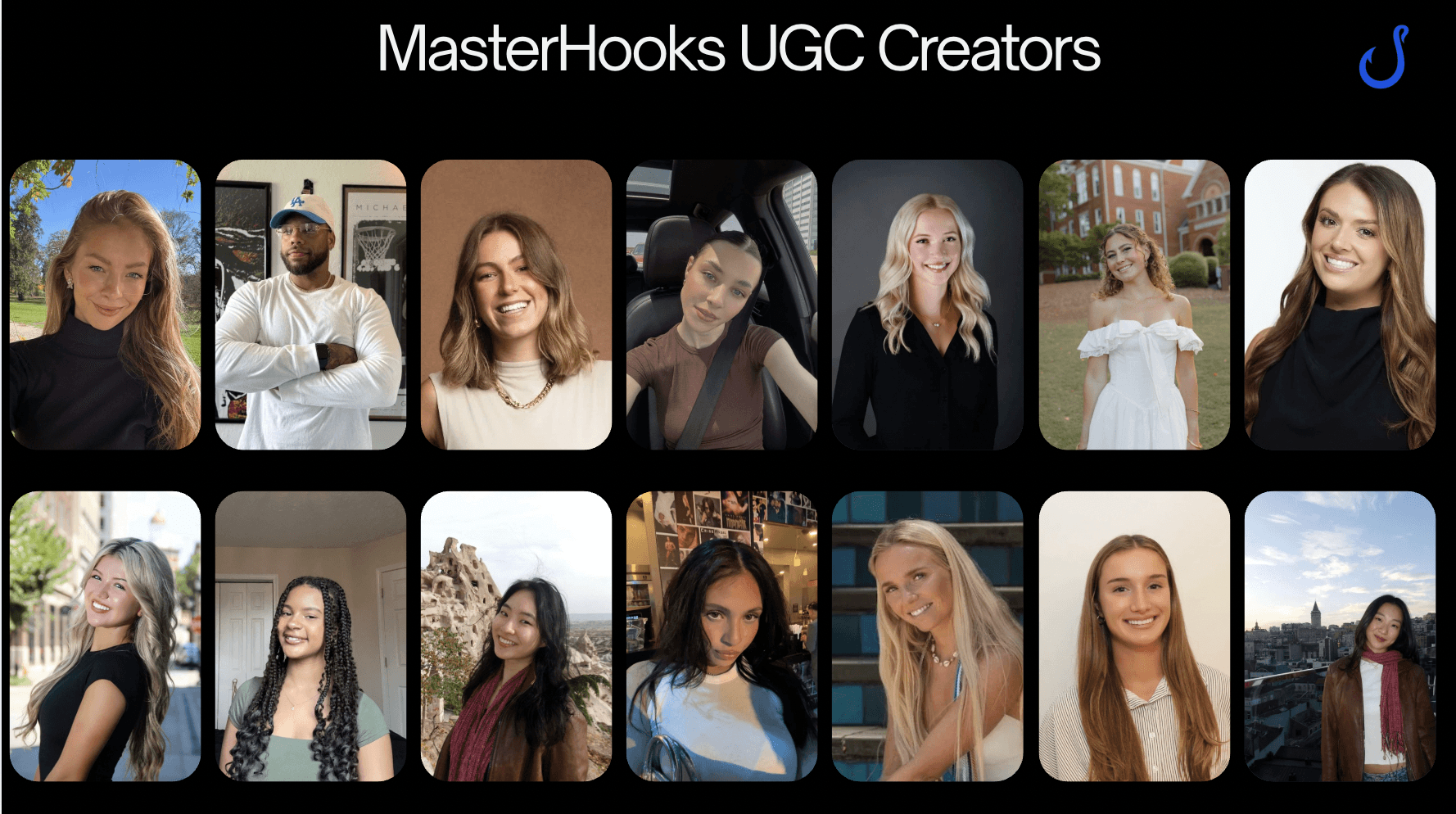
Why This Matters for Brands Today (MasterHooks POV)
This exact operating philosophy is what modern growth teams need:
Hook intelligence
UGC systems
Creator ops at scale
Relentless testing
Not one viral video.
A factory that produces them.
If you’re building apps, SaaS, or consumer brands—and you’re still gambling on single creatives—you’re already behind.